Every growth guide says the same thing: post every day, stay consistent, feed the algorithm. And every month, thousands of small creators try it, burn out by week three, quit entirely, and grow less than if they had never started the daily grind.
Here is the honest version: daily posting helps, but it is nowhere near required. What is required is showing up predictably, making each post count, and squeezing full value out of everything you publish. You can do all three on a three-posts-a-week budget. This is how.
Why daily posting is overrated for small accounts
Recommendation algorithms in 2026 evaluate posts individually. TikTok, Instagram Reels, YouTube Shorts and even X's feed test each piece of content with a sample audience and expand distribution if it performs. A great post from an account that publishes twice a week beats a mediocre post from a daily account, every time.
Daily posting mattered more when feeds were chronological and volume equaled visibility. Today volume mostly equals more chances at bat, which helps, but only if quality holds. For a solo creator or small brand, quality does not hold at seven posts a week. It holds at three.
There is also a compounding cost nobody prices in: the accounts that quit are almost always the ones that overcommitted. Sustainable output beats impressive output, because the algorithm's biggest reward goes to accounts that are still posting a year from now.
The three-posts-a-week growth system
Make fewer, heavier posts
With three slots a week, every post earns its place. Use one teaching post, one story or opinion post, and one engagement or soft-sell post. If you need a menu, our 30 content ideas list has six categories to rotate through.
Heavier does not mean longer. It means each post has a real hook, one clear idea, and a reason for someone to comment or save it. Saves and shares are the strongest growth signals on every platform in 2026.
Multiply each post across platforms
This is the step that makes three posts feel like thirty. The same three ideas, adapted per platform, cover Instagram, TikTok, X, LinkedIn, Threads, Bluesky, Facebook and more. Audiences barely overlap between platforms, so each cross-post reaches mostly new people. The full method is in our cross-posting guide.
Three posts a week across nine platforms is 27 published pieces from three writing sessions. That is more surface area than a daily poster on one platform, for a third of the creative effort.
Post at the right time, not more often
When you post less, timing matters more, because each post has fewer siblings to cover for it. Schedule each platform in its peak window instead of blasting everything at once. We published the per-platform data in best times to post on social media.
This is exactly what a scheduler is for: batch your three posts on Monday, queue them across the week at each platform's best hour, done. WriteOnce does the one-post-to-10-platforms part and the timezone-aware scheduling in one screen.
Spend the saved time in the comments
Here is the trade almost nobody makes: take the hours you saved by not producing daily content and spend even half of them replying to comments, answering DMs, and commenting on bigger accounts in your niche. Engagement is the growth lever solo accounts systematically underuse.
A thoughtful comment on a large account in your niche is seen by thousands of the exact people who might follow you. Ten minutes of comments a day regularly outperforms a fourth weekly post, and you can check the difference in your numbers with an engagement rate calculator.
Recycle your winners on a delay
Every four to six weeks, take your best-performing post and re-run it in a new format: text becomes carousel, carousel becomes video. Most of your audience never saw the original, and the idea is pre-validated. The complete playbook is how to turn one post into ten.
What a realistic week looks like
- Monday, 60 minutes: pick three ideas, write three master posts, adapt per platform, schedule everything for the week.
- Tuesday to Sunday, 10 minutes a day: reply to every comment, leave five genuine comments on bigger accounts in your niche.
- Once a month, 30 minutes: check analytics, find the winner, queue a repurposed version, adjust next month's ideas.
Total: under three hours a week, every part of it sustainable indefinitely. Compare that to the daily-posting plan most people abandon by February.
The honest caveats
If you are competing in pure entertainment on TikTok, raw volume still helps more than in any other niche. And in your first month, posting a bit more often (four to five times a week) gives the algorithms more data to figure out who your content is for. Front-load slightly, then settle into the sustainable rhythm. Our posting frequency guide has per-platform numbers.
Frequently asked questions
Can you really grow posting 3 times a week?
Yes. Growth correlates with per-post quality, engagement signals like saves and shares, and consistency over months. Three strong posts a week, cross-posted to many platforms and backed by daily comment activity, outgrows seven rushed posts on one platform.
Will the algorithm punish me for not posting daily?
No platform penalizes lower frequency. What happens is simply that you get fewer chances for a post to take off, which you offset by making each post better and publishing it on more platforms.
What should I do instead of posting more?
In order of return: reply to every comment you get, comment genuinely on bigger accounts in your niche, improve your hooks, and repurpose your best old content. All four beat an extra mediocre post.
How long until I see growth posting less often?
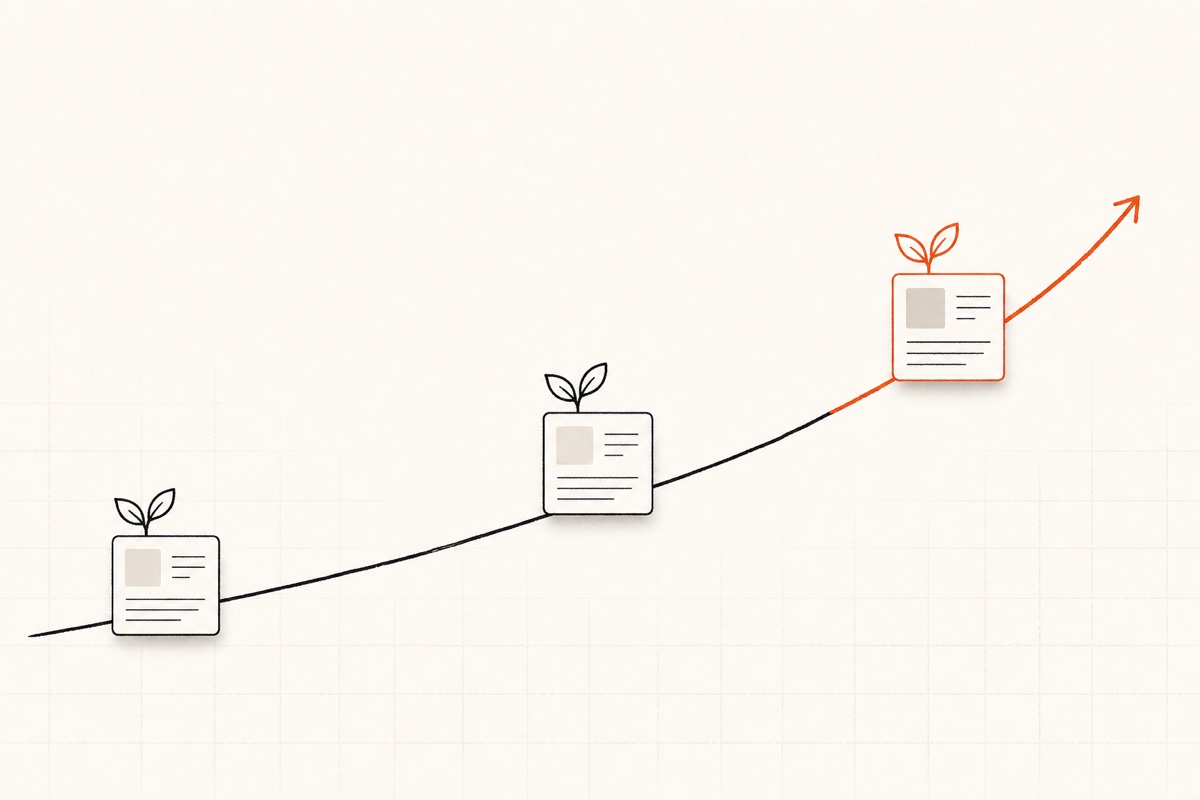
Same as posting daily: months, not weeks. Social media growth is a compounding curve. The advantage of the lighter schedule is that you will actually still be posting when the curve bends. If the publishing overhead is what burns you out, try WriteOnce free for 7 days and cut it to one session a week.
Write once. Post to all 10 platforms.
One composer, per-platform tweaks, scheduled in your timezone.