Five years ago, hashtag strategy was a whole discipline: 30 tags per post, researched sets, banned-hashtag checkers. Today most big creators use two or three, and plenty use none. So do hashtags still work in 2026, or are they a habit left over from an older internet?
The honest answer: hashtags still work, but they changed jobs. They stopped being a reach engine and became a categorization signal. That shift changes how many you should use, which ones, and how much time the whole exercise deserves (much less than it used to). Here is the platform-by-platform reality.
What changed: from discovery engine to metadata
In the hashtag era, feeds were mostly chronological and hashtag pages were real discovery surfaces. Tagging #marketing put you in front of everyone browsing #marketing, so more tags meant more doors.
Recommendation algorithms ended that. TikTok, Instagram, YouTube and increasingly every platform now analyze the content itself: the text, the audio, the objects on screen, the captions, and how the first viewers respond. The algorithm does not need you to say what your post is about. It knows.
What survives is the metadata job. Hashtags remain one signal among many that help a platform categorize your content faster and occasionally help a human find it through search. Useful, real, and worth about 30 seconds per post.
Hashtags by platform in 2026
Instagram: 3 to 5 relevant tags. Instagram itself has said a handful of relevant hashtags beats a wall of 30, and dumping banned-list-checked tag sets in the first comment is a relic. Keyword-rich captions now matter more for search than tags do.
TikTok: 3 to 4, treated as topic labels. TikTok's algorithm is the most content-aware of all; hashtags mostly help it place you faster in the right niche during a video's first test rounds. Broad tags like #fyp are decoration and do nothing. Pair tags with native caption emoji; our TikTok emoji meanings guide covers bracket codes and slang that actually land with TikTok audiences.
LinkedIn: 2 to 3. LinkedIn de-emphasized hashtags heavily; they add mild categorization and zero reach. Never more than three; a tag cloud reads as spam to both the algorithm and your peers.
X: 0 to 1. Hashtags on X mostly signal amateur hour in 2026 outside of live events and branded campaigns. Trending topics work without the symbol; write the keyword into the sentence instead.
Threads and Bluesky: 0 to 2. Threads supports tags lightly; Bluesky's culture prefers plain language and custom feeds handle the discovery. On both, conversational text beats tagged text.
Pinterest: skip hashtags, write keywords. Pinterest is a search engine; its discovery runs on keywords in titles and descriptions, not tags.
YouTube: 2 to 3 above the fold matter slightly for search; titles and descriptions do the heavy lifting.
Reddit and Facebook: effectively zero. Reddit has no hashtag culture at all, and Facebook tags add nothing measurable.
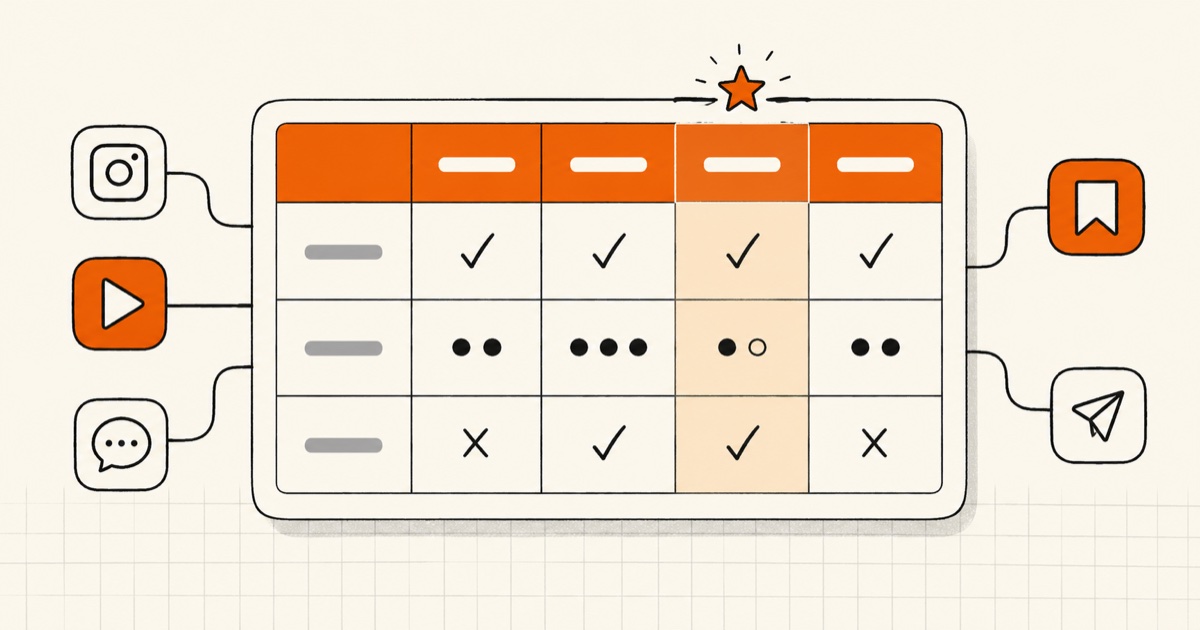
Notice the pattern: the platforms where hashtags matter most are the ones where they help categorize (Instagram, TikTok), and even there the right number is a handful, not a wall.
How to pick your 3 to 5 tags without wasting time
- One broad niche tag that names your category (#personalfinance, #webdesign). It tells the platform which universe you belong to.
- Two or three specific tags that name the actual content (#budgettemplate, #figmatips). Specific tags face less competition and match higher-intent searches.
- Optionally one branded or community tag if you are building one. It does nothing for reach; it collects your content in one place.
Skip: banned-hashtag paranoia, tag sets rotated to "avoid shadowbans" (the mechanism is folklore), and any tag you would not say out loud when describing the post. A hashtag generator gets you a sensible set in seconds, which is about the right time budget. Since the right tags differ per platform, this is one more thing to adjust when cross-posting, and one more reason to write captions per platform in one screen rather than copy-pasting one blob everywhere.
Where the optimization time actually pays
If you used to spend 15 minutes per post on hashtags, reinvest it here, in order of return:
- The hook. The first line or first two seconds decides your reach now, full stop. Our guide to writing hooks that stop the scroll covers the formulas.
- Keywords in the caption. Platform search in 2026 reads your actual words. Say the thing your audience would search for, in plain language, inside the caption. A caption generator helps you draft platform-native versions fast.
- Posting time. A well-timed post beats a well-tagged one. Per-platform windows are in our best times guide.
- Saves and shares. Content designed to be kept (checklists, references, templates) sends stronger distribution signals than any metadata. Watch these in your weekly numbers; see the metrics that matter.
Hashtags moved from strategy to checklist item. Treat them accordingly: pick a handful per platform in seconds, then publish everywhere from one composer and spend the saved time on the parts that grow accounts. Try WriteOnce free for 7 days.
Frequently asked questions
How many hashtags should I use in 2026?
Instagram and TikTok: 3 to 5. LinkedIn: 2 to 3. X, Threads, Bluesky: 0 to 2. Pinterest, Reddit, Facebook: none, use keywords in the text instead. More tags than that adds clutter, not reach.
Do hashtags increase reach on Instagram anymore?
Marginally. Instagram's own guidance and every 2026 study agree that hashtags provide a small categorization benefit, not a reach multiplier. Keyword-rich captions and strong early engagement drive discovery now.
Is using too many hashtags bad?
It will not get you penalized, but walls of tags read as spam to viewers, bury your caption, and signal low effort. The cost is credibility rather than an algorithmic punishment.
Do hashtags work on TikTok in 2026?
As topic labels, yes: a few specific tags help TikTok categorize your video faster. As a growth hack, no: #fyp and #viral have no effect, and the content itself decides distribution.
Write once. Post to all 10 platforms.
One composer, per-platform tweaks, scheduled in your timezone.