The default way people do social media is the worst way: open the app, stare at the compose box, write something under pressure, post it, repeat tomorrow. It produces mediocre posts, daily anxiety, and the skipped days that kill accounts.
Batching fixes all three. You create a week of content in one sitting, schedule it, and spend the rest of the week replying to comments instead of inventing posts. Here is the exact one-hour workflow, minute by minute.
Why batching works
Content creation and content ideas use different mental modes. Coming up with what to say is divergent, creative work. Writing captions and formatting posts is convergent, mechanical work. Switching between them on demand, every day, is why the compose box feels heavy.
Batching separates the modes. You do all the idea work at once, then all the writing at once, then all the scheduling at once. Each phase gets easier as you go because you stay in one mode. The same person who struggles to write one post a day can comfortably write seven in half an hour this way.
There is a second benefit: batching forces a plan. When you can see the whole week, you naturally vary your content instead of posting three promos in a row because you could not think of anything else.
What you need before the hour starts
- A running ideas note. Keep one note on your phone. Every question a customer asks, every opinion you defend in conversation, every mistake you fix goes in it. This note is what makes the 15-minute idea phase possible.
- A scheduling tool. Batching without scheduling just moves the daily chore from writing to publishing. You want everything queued in one sitting. WriteOnce covers all 10 platforms from one composer; anything that schedules your platforms works for this system.
- One hour, uninterrupted. Same time every week. Monday morning and Friday afternoon are popular. Protect it like a client meeting.
Minute 0 to 15: pick 5 ideas and give each a job
You need five core ideas for the week, not seven or ten. Five ideas cross-posted beats ten ideas half-executed. Pull from your ideas note and assign each one a job:
- Teach something. A how-to, a process, a tool you use. This is your most shareable post.
- Take a position. An opinion in your niche that some people will disagree with. This is your most commented post.
- Show your work. Progress, behind the scenes, a before and after. This is your most trusted post.
- Answer a real question. Take the exact question a customer or follower asked and answer it publicly.
- Tell a story. A mistake, a win, a lesson. Stories carry further than advice on every platform.
Write each idea as a single sentence. Do not write the posts yet. If a hook occurs to you, jot it and move on. Fifteen minutes, five sentences, done.
Minute 15 to 45: write the five master posts
Now write each idea as one full post, about 100 to 200 words, in your natural voice, with no platform in mind. This is the master version. The formula that keeps this fast:
- Hook: one line that names the problem or makes the claim. It must survive being the only line anyone reads.
- Body: three to six short lines delivering the goods. Line breaks between them. No paragraphs of dense text.
- Ending: a question, a takeaway, or a soft pointer to what you do.
Six minutes per post. Do not polish. A batched post at 85 percent quality, published, beats a perfect post that never leaves drafts. If one idea is not working, swap it for another from the note instead of grinding on it.
Writing all five back to back is where the mode effect kicks in: post four and five will come out faster and better than post one. That never happens when you write one per day.
Minute 45 to 60: adapt and schedule everything
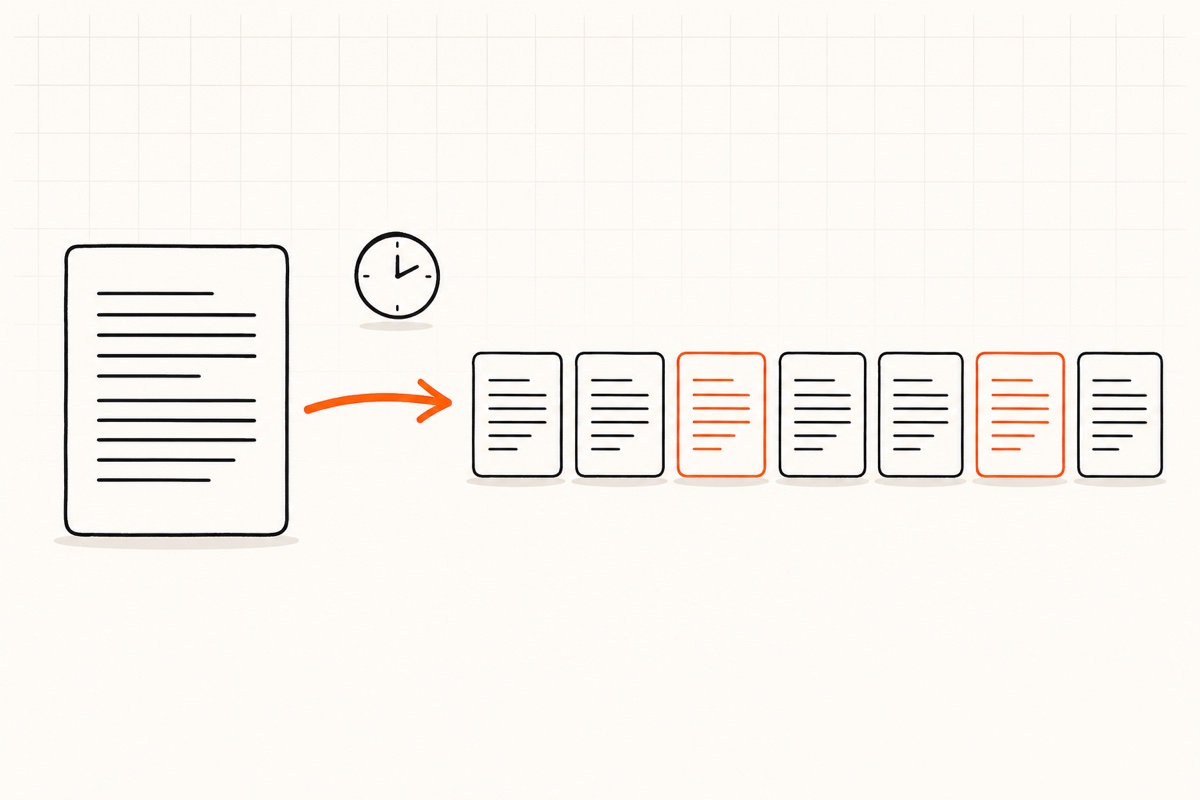
The last phase turns 5 master posts into a full week across your platforms. For each post:
- Trim for the short platforms. X and Bluesky get the hook plus the single best line. If the post genuinely needs length, thread it with a thread splitter.
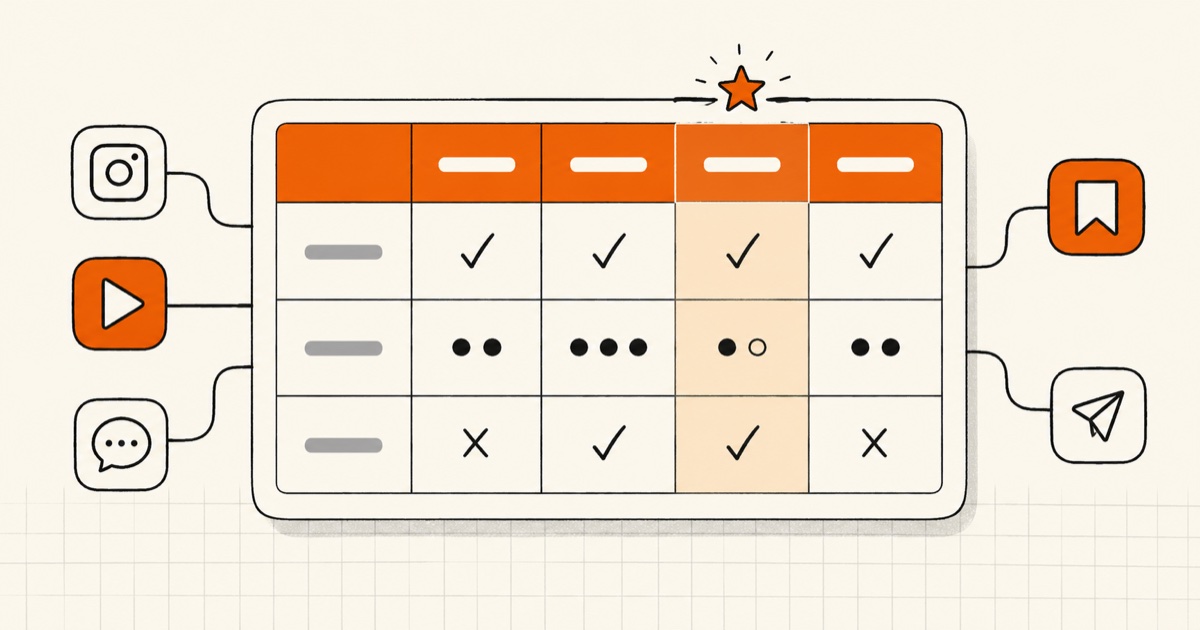
- Keep it native for the mid-length platforms. LinkedIn, Threads, Facebook and Instagram captions can usually take the master version with light edits. Watch the limits with a character counter for every platform, and adjust tone per platform as covered in our cross-posting guide.
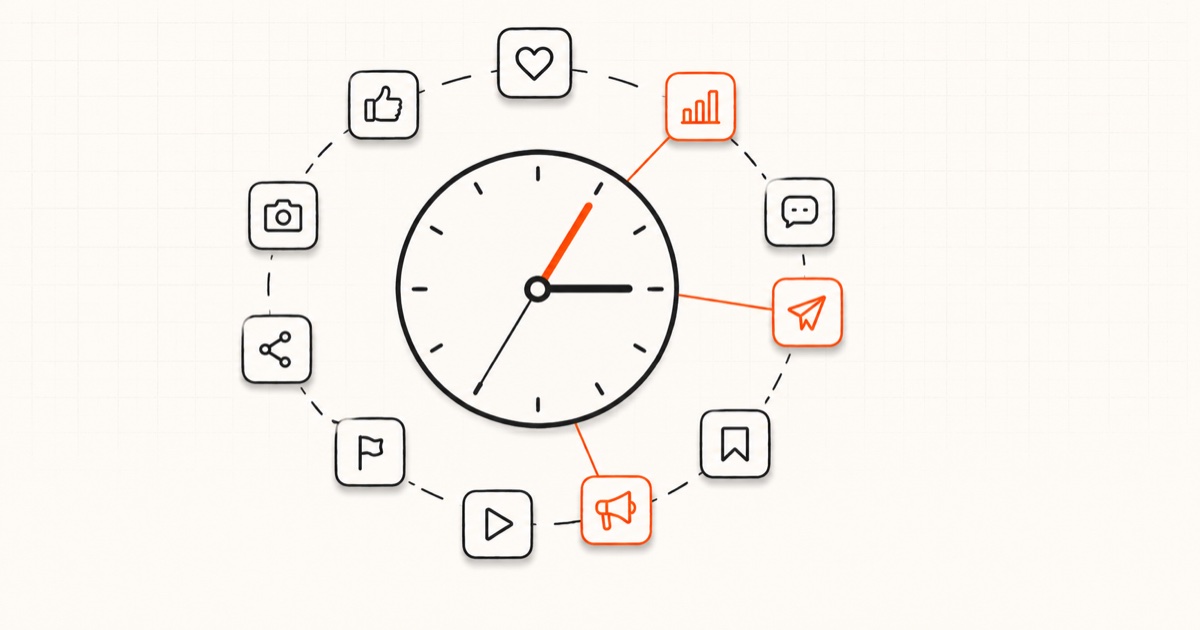
- Schedule each platform at its own peak time. Spread the five posts across the week, and queue each platform in its best window using our best times to post data.
With a per-platform composer this phase is mechanical: paste the master, tweak, set the time, next. In WriteOnce you write the master once, adjust each platform's version in the same screen, and the weekly queue schedules everything in your timezone. The 15 minutes is realistic; people who do this manually across 10 platforms report it taking well over an hour, which is exactly why they stop.
One hour in, your week is done: five ideas, five master posts, queued natively across every platform at the right times.
Scaling the system when one hour feels easy
- Week 4 and beyond: recycle winners. Your best post from three weeks ago is new content for a different format. Turn it into a video script, a carousel, or a longer piece. Full playbook here: how to turn one post into ten.
- Batch visuals separately. If you post images or video, do a second monthly batch session just for media. Mixing writing and editing in one hour breaks the mode focus.
- Go two weeks out. Once the weekly hour is comfortable, the same session can fill two weeks. The marginal cost of each extra post keeps dropping.
Frequently asked questions
Is batched content less authentic?
No. Authenticity is in the voice and substance, not in how recently it was typed. Your audience cannot tell a scheduled post from a live one, and batching usually raises quality because you write with a clear head instead of daily pressure. Post reactive, in-the-moment content live on top of the batch whenever it happens.
How far ahead should I batch social media content?
One week is the sweet spot for most people: far enough to remove daily pressure, close enough to stay timely. Evergreen niches can comfortably batch a month. Never batch so far ahead that you would not notice your own posts being stale.
What if something happens mid-week and my scheduled posts feel wrong?
Pause the queue. Any decent scheduler lets you push everything back a day or pull a post. This takes one minute and is a weak argument against batching the other 51 weeks of the year.
Do I really need a scheduling tool for this?
For one platform, no. For three or more, yes. Manual publishing means being on your phone at every peak time on every platform, which quietly turns the one-hour system back into a daily chore. Scheduling is the part that makes batching stick. You can try WriteOnce free for 7 days and queue your first week in one sitting.
Write once. Post to all 10 platforms.
One composer, per-platform tweaks, scheduled in your timezone.